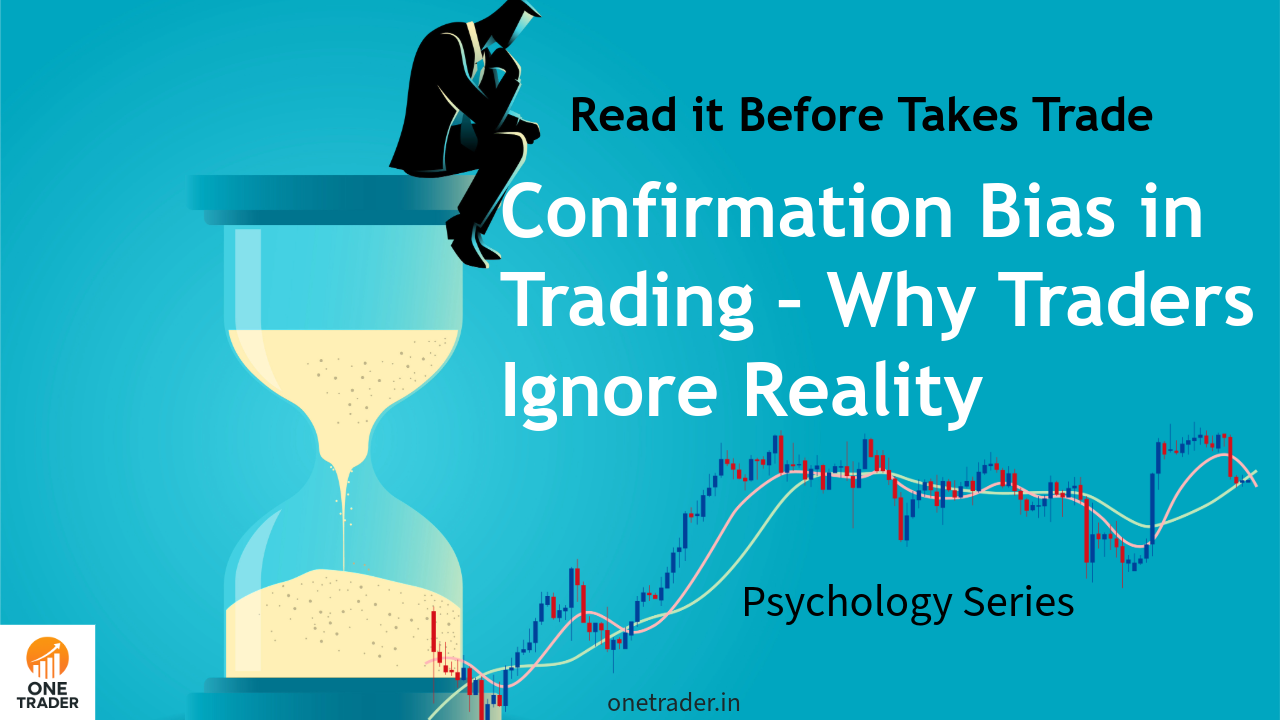
🧠 Confirmation Bias in Trading – Why Traders Only See What They Want to Believe
Introduction: The Invisible Trap Traders Don’t Realize
In the stock market, charts don’t trap you first — your mind traps you first.
One of the biggest invisible mental traps traders fall into is Confirmation Bias.
It is when you believe something first, and then only look for information that supports that belief, ignoring all warnings and risks.
“When you want something to be true, you will find 100 reasons to justify it.”
This bias silently destroys portfolios because traders don’t trade the market —
they trade their expectations.
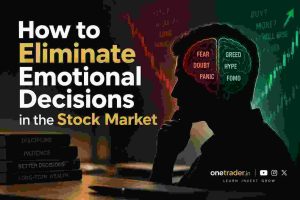
Also Read: How to Eliminate Emotional Decisions in the Stock Market
Let’s break it down deeply so you never fall into this trap again.
What is Confirmation Bias in Stock Market?
Confirmation bias is when a trader forms an opinion first and then searches only for information that confirms it.
Example:
You buy a stock. Suddenly:
- You only watch positive YouTube videos about it
- You ignore negative news
- You look for “target ₹1000 coming soon” posts
- You stop analyzing objectively
You don’t want the truth — you want validation.
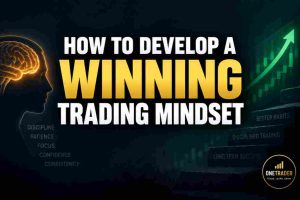
Also Read: How to Develop a Winning Trading Mindset
That’s not analysis.
That’s emotional trading.
Real-Life Examples of Confirmation Bias
🏦 Example 1: Yes Bank Investors (Classic Case)
When Yes Bank started falling from ₹300 → ₹200 → ₹100:
- Retail crowd kept saying “temporary fall”
- Forums were full of: “Yes Bank is a gem, unlimited potential”
- People kept averaging again and again
- They ignored bad financials, RBI warnings, NPAs
- Stock went to ₹5–₹10
They did not analyze — they defended their belief.
🚆 Example 2: IRCTC at Peaks
During the IRCTC frenzy, many retail traders believed:
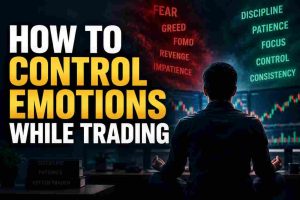
Also Read: How to Control Emotions While Trading
“This is a monopoly. It will never fall.”
So they only consumed bullish content and ignored valuations.
Correction came — and many learned confirmation bias the hard way.
💻 Example 3: IT Stocks Mania (Infosys, TCS 2022 Fall)
During tech boom, traders believed
“IT always performs. It can’t fall.”
Even when results slowed and global tech fell, many retail traders refused to accept it.
Why?
Because their belief was stronger than the market reality.
How Confirmation Bias Forms in Traders
- Buying first, thinking later
- Listening to only one side of the story
- Trusting influencers blindly
- Seeing profits previously → thinking you’re always right
- Trying to protect ego instead of capital
Signs You Have Confirmation Bias
Ask yourself honestly:
- Do you Google “Is ____ stock good to buy?” instead of real research?
- Do you get angry at negative opinions about your stock?
- Do you feel happy watching only bullish videos after buying something?
- Do you ignore stop loss because you “believe it will bounce back”?
- Do you defend your trade even when data says exit?
If yes → You’re not analyzing the market. The market is analyzing you.
Also Read: Gambler’s Fallacy in Trading – Why Traders Think Markets Must Reverse
How Confirmation Bias Destroys Traders
- ❌ Makes you hold losing positions too long
- ❌ Blinds you from danger signals
- ❌ Stops you from cutting losses
- ❌ Creates emotional attachment to stocks
- ❌ Turns trading into gambling
Worst part?
You feel right until your money tells you wrong.
How Professionals Avoid Confirmation Bias
Professional traders:
- Don’t fall in love with stocks
- Seek negative viewpoints first
- Follow rule-based entries and exits
- Listen to numbers, not emotions
- Accept being wrong quickly
Pro traders ask:
“Where can I be wrong?”
Also Read: The 1.8 Crore Solapur Trading Tragedy: A Warning to Every Retail Trader
Retail traders ask:
“How can I prove I am right?”
Big difference.
Practical Tips to Beat Confirmation Bias
✔️ 1. Write Your Reason Before Entering
If you can’t write why you’re entering → you’re gambling.
Also Read: Recency Bias in Trading – Why Recent Trends Fool Traders
✔️ 2. Search for Negative Views Too
Force yourself to check opposite viewpoints.
✔️ 3. Follow Stop Loss Religiously
Your ego shouldn’t be bigger than your stop loss.
✔️ 4. Track Wrong Trades in Journal
Note: What belief trapped me here?
✔️ 5. Don’t Trust One Source
Never invest based on one video / one influencer / one tweet.
Also Read: Anchoring Bias in Trading – Why Traders Get Stuck to One Price (2025)
✔️ 6. Ask The Golden Question
“If I didn’t own it, would I buy it right now?”
If answer is no → exit emotionally, not financially.
Bonus Pro Technique – “Devil’s Advocate Approach”
Before taking a trade, answer this:
- Who is on the opposite side?
- Why are they selling if stock is so good?
- What do they know that I am ignoring?
When you argue against your own trade, you trade smarter.
Conclusion
Confirmation bias is one of the most dangerous trading traps.
It doesn’t just cost money — it blocks learning.
Also Read: Overconfidence Trap in Trading – Why Early Wins Create Huge Losses
The goal is not to be right.
The goal is to make money and survive long-term.
Successful traders don’t marry a stock — they date setups.
❓ FAQ – Confirmation Bias in Trading
Q: Why do traders fall into confirmation bias?
A: Ego + emotional attachment + desire to be right.
Q: How do I avoid it?
A: Listen to counter opinions, maintain a journal, and follow rule-based exits.
Also Read: Loss Aversion in Stock Market – Why Traders Avoid Small Losses
Q: Is it okay to be wrong in markets?
A: Yes. Being wrong early is cheaper than being right late.