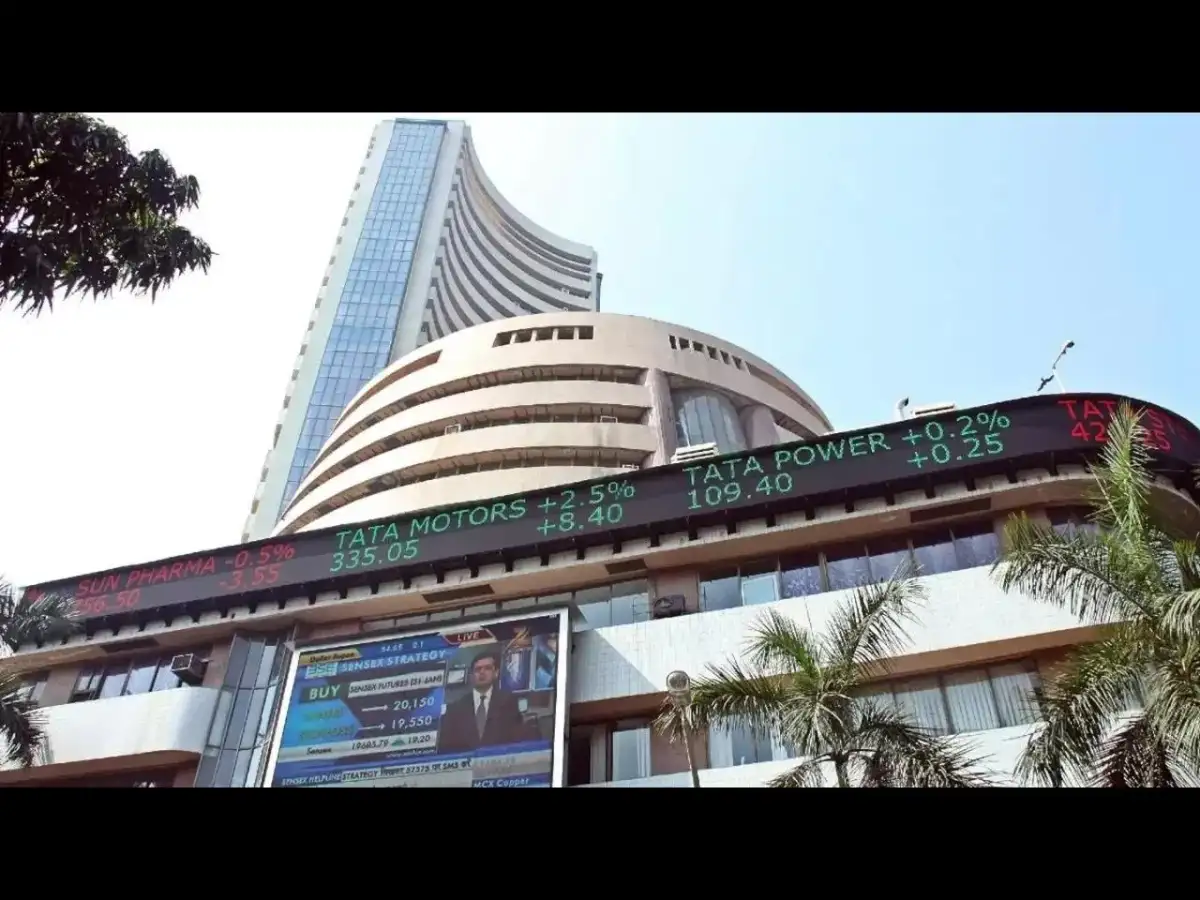

Most beginners think markets open directly at 9:15 — but that first 15 minutes (9:00–9:15) is not for trading. It’s the pre-open session, one of the most important yet hidden phases where big players set the tone for the day.
Here’s your complete, easy-to-understand article
(Onetrader Guide — by Onetrader)
⏰ What Happens in the Stock Market from 9:00 to 9:15 AM? (Full Explanation)
Every trading day, the Indian stock market (NSE & BSE) technically starts working at 9:00 AM, not 9:15.
But trading doesn’t begin immediately — instead, there’s a 15-minute “pre-open session.”
Also Read: Market Order vs Limit Order: Key Differences Explained
This is when big institutions, mutual funds, and FII traders place their orders to decide the day’s opening price.
Retail traders can also participate, but it’s mainly driven by institutional activity.
Let’s break it down minute by minute 👇
🕘 9:00 AM – 9:08 AM → Order Entry Period
This is the first phase of the pre-open session.
🔹 What Happens:
- Traders can place, modify, or cancel orders for stocks.
- Orders are not matched immediately — they’re just collected.
- These orders help the exchange understand buy & sell interest for each stock.
🔹 Who Places Orders:
- Institutional investors, foreign funds, and large traders who want to set direction.
- Retail traders who want to enter at market open can also place orders.
🔹 What’s Not Allowed:
- No circuit filters (like upper/lower circuits) are hit during this time.
- Market orders are accepted but not executed yet.
💡 Pro Tip:
If overnight news breaks (like results, global cues, or policy changes), large players use this window to position themselves before open.
Also Read: How to Buy Your First Stock in India: A Beginner’s Step-by-Step Guide
🕘 9:08 AM – 9:12 AM → Order Matching & Equilibrium Price Discovery
This is the core of the pre-open session — the real action happens here.
🔹 What Happens:
- The system starts matching buy and sell orders collected earlier.
- Based on the demand & supply, it finds a “price point” where most trades can happen.
- That price becomes the opening price at 9:15 AM.
🔹 Example:
If Reliance has 1 lakh shares in buy orders between ₹2,900–₹2,950
and 1 lakh shares in sell orders between ₹2,920–₹2,960,
the exchange finds an equilibrium point, say ₹2,930.
That becomes the opening price when market starts.
🔹 This Process Ensures:
✅ Fair price discovery
✅ Smooth market opening (avoids volatility shocks)
✅ Transparency in order flow
🕘 9:12 AM – 9:15 AM → Buffer & Transition Period
🔹 What Happens:
- No new orders are accepted.
- Exchange systems finalize and confirm the opening price.
- Any pending unmatched orders are carried forward to the regular session (after 9:15).
This is basically the system sync period between pre-open and normal trading.
Also Read: Best Stock Market Apps in India: Features, Charges and How to Choose
💡 Example:
If you placed a buy order for Infosys at ₹1,600 during 9:00–9:08,
and the discovered opening price is ₹1,605 —
your order executes automatically at ₹1,605 when the market opens.
🕘 9:15 AM → Market Officially Opens!
At 9:15 AM, normal trading starts (continuous market session).
Prices may move sharply in the first few seconds as orders get filled.
That’s why professional traders say:
“The move at 9:15 AM is created between 9:00 and 9:15.”
Also Read: Best US Stock Trading Platforms for Indians: Fees, Features and How to Choose
🧠 Why the Pre-Open Session Exists
Before 2010, Indian markets opened directly at 9:15 — causing wild volatility every morning.
So SEBI and exchanges introduced the pre-open mechanism to:
- Prevent massive opening spikes or crashes
- Allow fair participation for all traders
- Improve price stability & transparency
💡 Implemented after 2010, it mirrors systems used by global exchanges like NYSE, LSE, and SGX.
📈 Which Stocks Are Included?
Originally, only Nifty 50 and Sensex 30 stocks were allowed in pre-open.
Now, the pre-open session covers all stocks traded in equity (NSE & BSE).
However, volume and liquidity remain higher in index-heavy stocks like:
Also Read: How to Find Your Demat Account Number Online – DP ID, Client ID & BO ID
- Reliance Industries
- HDFC Bank
- Infosys
- TCS
- ICICI Bank
⚠️ Mistakes Retail Traders Make During 9:00–9:15
1️⃣ Placing blind market orders — gets executed at volatile opening price.
2️⃣ Assuming market is open — your order is not live until 9:15.
3️⃣ Reacting to pre-open prices — they often change by 9:15.
4️⃣ No strategy — trading the first minute without setup leads to loss.
💡 Remember: Institutions use this period to set traps or signals — retail traders should observe, not jump in.
🧩 How Traders Can Use This Session Smartly
✅ Watch pre-open data — check which stocks show huge price gaps.
✅ Note “Gap Up” or “Gap Down” candidates — these often give breakout trades later.
✅ Avoid placing random orders — better to wait till 9:20–9:30 to confirm direction.
✅ If you’re an intraday trader:
Use pre-open volume and open interest data to prepare your watchlist.
🏦 Bonus: Timeline Recap
| Time | Phase | What Happens |
|---|---|---|
| 9:00–9:08 | Order Entry | Orders placed / modified / cancelled |
| 9:08–9:12 | Order Matching | Equilibrium price discovered |
| 9:12–9:15 | Transition | System freeze & open price confirmation |
| 9:15 | Market Opens | Orders executed, trading starts |
🧠 SEBI & Exchange Comments
SEBI and NSE have emphasized that the pre-open session improves efficiency and helps “avoid disorderly market openings.”
They continue to refine this system — such as extending pre-open for IPO listings and special events.
Also Read: How to Transfer Shares From One Demat Account to Another – Complete Guide
Example: Newly listed IPOs often have 45-minute pre-open sessions to ensure fair discovery before trading.
🏁 Final Thoughts
Between 9:00 and 9:15, the market silently decides what will happen for the rest of the day.
Smart money positions itself, liquidity is balanced, and the battle between buyers and sellers begins before the bell.
So next time you watch the ticker at 9:15 and wonder why a stock jumped 3% instantly —
remember, that move was born in those quiet 15 minutes.
Also Read: Demat Account Charges in India: AMC, Brokerage, DP Charges and Other Fees