
Estimated reading time: 6 minutes
Thank you for reading this post, Please bookmark onetrader.in website for regular updates!
Rich Dad Poor Dad – Full Summary
Introduction
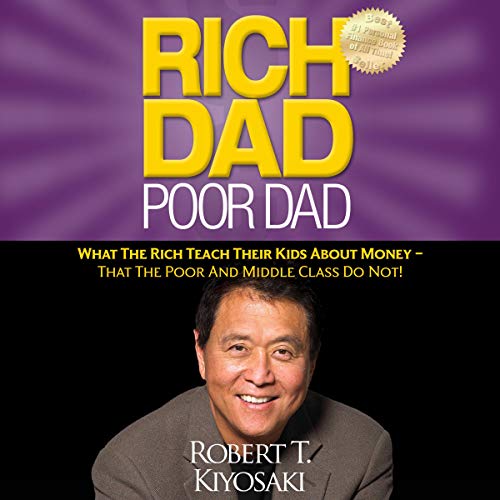
Robert Kiyosaki’s Rich Dad Poor Dad is one of the most influential personal finance books ever written. The book highlights the stark difference between the financial mindsets of two father figures in Robert’s life: his biological father (Poor Dad) and his best friend’s father (Rich Dad). Poor Dad was highly educated, a government employee, and believed in the traditional path of schooling and job security. Rich Dad, though less formally educated, was a successful entrepreneur who taught Robert how money works.
The central idea is simple yet powerful: The rich don’t work for money; they make money work for them. The book emphasizes financial education, building assets, and escaping the “rat race.”
This master summary will cover chapter-wise insights, key lessons, storytelling examples, practical applications in India, FAQs, and important quotes to give you a complete understanding.
Chapter-Wise Summary with Examples
Chapter 1: The Rich Don’t Work for Money
- Poor Dad told Robert to “study hard, get a good job, and earn money.”
- Rich Dad taught: “The poor and middle class work for money, but the rich have money work for them.”
- Robert, as a child, worked for 10 cents per hour under Rich Dad. When he complained, Rich Dad explained the value of learning, not earning.
- Storytelling Example (Indian context): An IT employee earning ₹60,000 per month works long hours for salary. But if he invests ₹10,000 monthly in ETFs, in 10 years his portfolio itself starts generating income, reducing dependency on salary.
- Lesson: Don’t get stuck in the paycheck trap. Instead, focus on creating income-producing assets.
Chapter 2: Why Teach Financial Literacy?
- Financial literacy is the foundation of wealth.
- Rich Dad explained the difference between assets and liabilities.
- Assets put money in your pocket; liabilities take money out.
- Middle class often confuse liabilities as assets (e.g., buying a car or a house with EMI).
- Example: Buying a ₹15 lakh car on loan → EMI ₹25,000 per month (liability). Buying a small shop for rent → rental income ₹15,000 per month (asset).
- Lesson: Build your asset column. Examples include businesses, stocks, bonds, rental properties, and intellectual property.
Chapter 3: Mind Your Own Business
- Most people spend life building someone else’s business (working as employees).
- Rich Dad encouraged Robert to build his own portfolio of income-generating assets.
- Example: A bank employee earns salary but also starts a side business of selling tiffins online. Slowly, the side business overtakes salary income.
- Lesson: Don’t only depend on salary; grow your own business/investments.
Chapter 4: The History of Taxes and the Power of Corporations
- Taxes were originally meant for the rich but ended up burdening the poor and middle class.
- Rich Dad highlighted how corporations use tax advantages to grow wealth (expenses, deductions, reinvestments).
- Example: In India, a salaried person earning ₹12 lakh per year pays 20–25% tax. But a business owner can deduct expenses (rent, travel, phone bills) before paying tax, reducing taxable income.
- Lesson: Learn how money and taxes work. Use legal structures like businesses, LLPs, or companies for tax efficiency.
Chapter 5: The Rich Invent Money
- Opportunities are everywhere, but fear and lack of knowledge stop people.
- Rich Dad said: “The more you train your mind financially, the more opportunities you will see.”
- Example: In 2020 COVID crash, Nifty fell below 8,000. Those who invested saw it double to 16,000+ within 1.5 years. Rich Dad mindset means seeing crisis as opportunity.
- Lesson: Build financial intelligence to spot and act on opportunities.
Chapter 6: Work to Learn – Don’t Work for Money
- Instead of chasing high salaries, focus on learning valuable skills.
- Rich Dad advised Robert to learn sales, marketing, investing, and leadership.
- Example: A B.Tech graduate joins a startup at ₹20,000 salary but learns digital marketing, coding, and team leadership. Within 3 years, he launches his own company, earning lakhs.
- Lesson: Skills matter more than degrees when it comes to wealth creation.
Chapter 7: Overcoming Obstacles
- The biggest enemies of wealth are:
- Fear
- Cynicism
- Laziness
- Bad habits
- Arrogance
- Rich Dad explained that most people never invest because of fear of losing money.
- Example: Many Indians keep money in FDs at 6% interest, even though inflation eats away returns. Fear of stock market stops them from creating real wealth.
- Lesson: Develop courage, discipline, and persistence to overcome mental barriers.
Chapter 8: Getting Started
- Robert outlines 10 steps to develop financial genius:
- I need a reason greater than reality (have strong goals).
- I choose daily (mindset matters).
- I master the power of learning (continuous education).
- I choose my friends carefully (surround yourself with financially aware people).
- I master a formula and then learn a new one (adaptability).
- I pay myself first (save & invest before spending).
- I master the power of giving (law of reciprocity).
- I use assets to buy luxuries, not liabilities.
- I need heroes (learn from successful people).
- I teach and you shall receive (share knowledge).
- Example: A young Indian earns ₹25,000 monthly. By paying himself first (investing ₹5,000 SIP), he builds wealth slowly. After 10 years, compounding creates a strong asset base.
Practical Applications for Indians
- Middle-class Indians can apply Rich Dad lessons by:
- Avoiding debt traps like car loans, credit cards, and unnecessary EMIs.
- Building assets like ETFs (NiftyBees, BankBees), mutual funds, real estate, gold ETFs.
- Starting side hustles (freelancing, YouTube, e-commerce, digital services).
- Learning tax planning through ELSS, NPS, health insurance, and business deductions.
- Storytelling Example: Ramesh, an engineer in Hyderabad, bought a car worth ₹12 lakh on EMI and struggled every month. His friend Suresh invested the same EMI amount in stocks and after 7 years, bought a car fully in cash with investment profits. That’s the Rich Dad mindset.
Key Quotes with Explanations
- “The poor and middle-class work for money. The rich have money work for them.” → Salary gives security, but assets give freedom.
- “An asset puts money in your pocket, a liability takes money out.” → Owning a rental home vs owning a car loan.
- “Don’t work for money, work to learn.” → Skills outlast jobs.
- “The love of money is not the root of evil. The lack of money is the root of evil.” → Poverty creates more problems than wealth.
FAQs
- Is Rich Dad Poor Dad still relevant in 2025? Yes. Its principles are timeless—financial literacy, asset building, and money mindset are universal.
- How can students apply this book? Focus on learning skills like communication, sales, and investing basics early.
- Is having a job bad? No, but relying only on a job limits your freedom. Use your job to fund your asset building.
- How to start with a low salary? Even saving ₹2000–₹5000 per month in ETFs or SIPs builds wealth over time.
Conclusion
Robert Kiyosaki’s Rich Dad Poor Dad is more than a finance book—it’s a guide to changing your money mindset. The contrast between Poor Dad’s belief in education and job security, versus Rich Dad’s belief in financial education and assets, teaches us that true wealth comes from making money work for you.
For Indians, applying these lessons means avoiding debt traps, learning investing, and building long-term income streams.
The book’s ultimate lesson: Financial freedom starts with financial education.