
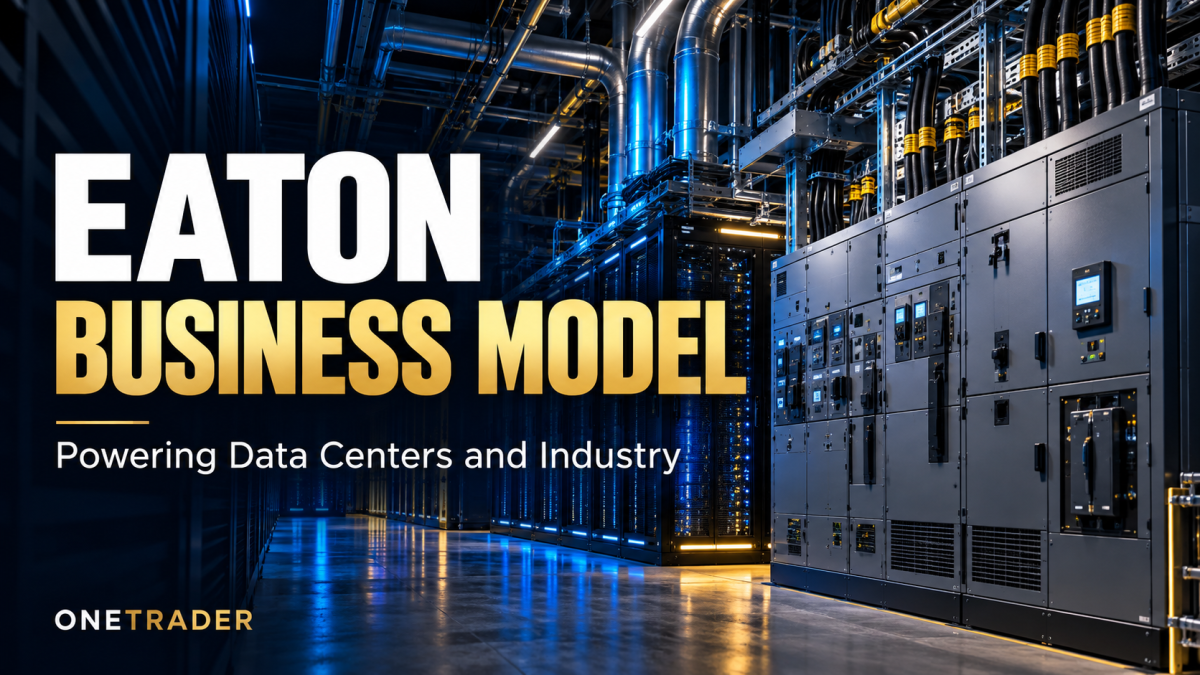
The Eaton business model sits at the intersection of electrical infrastructure, industrial investment and aerospace demand. Investors often encounter the company through the AI data-center story, but its products also support factories, utilities, buildings and aircraft. That breadth matters when assessing whether a strong period for one market can translate into durable company growth.
Eaton trades on the New York Stock Exchange under ETN. This article follows the approach used in our Vertiv business breakdown: understand the equipment, identify the customer need, and then examine the financial and execution risks. Company developments below are dated so that announced transactions are not confused with completed changes.
What Does Eaton Sell?
Eaton describes itself as an intelligent power-management company. Its electrical businesses supply equipment that helps customers distribute, control and protect electricity, including circuit breakers, switchgear, power-quality systems and related services. Its aerospace operations provide systems and components used in aircraft. The company also has a Mobility business with vehicle-related technologies.
The practical customer problem is reliability. A factory needs power equipment that supports its production process; a data center needs an electrical system suited to its computing load. Customers are therefore evaluating performance, engineering compatibility, delivery and support alongside the purchase price. Eaton’s business overview describes the product range and the industries it serves.
Also Read: Bitcoin Custody Explained: Wallets, Private Keys and Access Risks
How the Eaton Business Model Generates Revenue
The company earns revenue by supplying equipment, systems, components and services. Demand can come from new construction, expanded capacity, modernization and replacement of existing infrastructure. An installed base can create later service and upgrade opportunities, although the size and timing depend on the customer’s equipment and purchasing decisions.
A useful distinction is between an attractive end market and a profitable order. Industry spending creates opportunities, but Eaton still needs to win business, produce equipment efficiently and deliver it on time. Investors should connect revenue growth with margins and cash generation instead of assuming that every infrastructure project produces the same economics.
Why Data Centers Matter
More computing capacity requires supporting electrical infrastructure. Data-center projects can therefore expand the market for power-distribution and protection equipment. Eaton participates in the physical systems that make computing facilities usable, rather than earning its core electrical revenue from selling AI models or processors.
This is an analytical link between customer investment and equipment demand, not a promise that all AI spending reaches Eaton. Project design, customer budgets and supplier selection determine its actual opportunity. A facility can also face delays because of electricity availability, construction constraints or changes in deployment plans.
Also Read: Why Treasury Yields Affect US Stocks: Valuations, Earnings and Risk
Boyd Thermal Adds a Cooling Dimension
On March 12, 2026, Eaton completed its acquisition of Boyd Thermal, a supplier of liquid-cooling solutions. The timing is important: describing the acquisition as still awaiting completion would give readers an outdated picture of the business.
Combining electrical equipment with thermal capabilities could broaden Eaton’s role in infrastructure projects. Customers must manage both the delivery of electricity and the heat generated by equipment. However, a broader portfolio also brings integration work. The acquisition’s value ultimately depends on customer adoption, operational execution and the returns earned on the capital invested.
Read Growth by Segment and by Source
In its second-quarter 2026 results, Eaton reported sales growth of 21%, including organic growth of 14%. The same release reported year-over-year backlog increases of 43% in Electrical and 28% in Aerospace. These figures describe that reporting period; they are not forecasts for future quarters.

Separating organic growth from acquisitions and currency effects helps explain what changed inside the existing operations. Backlog adds information about booked work, but it is not the same as cash received or revenue already recognized. Readers should also watch the conversion of orders into deliveries, the product mix and the resources required to fulfill them.
Also Read: 3 US Payment Stocks to Watch: Visa, Mastercard and American Express
The Mobility Portfolio Is Still Changing
Eaton’s June 30, 2026 quarterly filing describes an agreement announced on June 10 to separate Mobility and combine it with Dana through a Reverse Morris Trust transaction. The company’s second-quarter release said the transaction was expected in the first quarter of 2027, subject to conditions.
As of the developments reviewed for this article, that was an announced transaction, not a completed disposal. Investors should distinguish current operating results from a possible future portfolio. Completion, transaction costs and the remaining company’s financial structure can change the interpretation of historical comparisons.
What Could Support a Competitive Position?
Product breadth, engineering experience and customer relationships may help a supplier compete in complex infrastructure projects. Equipment reliability can be especially valuable when failures disrupt operations. These are possible business advantages inferred from the nature of the market, rather than proof that Eaton has an unassailable competitive position.
Competitors can offer alternative systems, and customers can negotiate on price or divide purchases among suppliers. The useful evidence is whether the company sustains healthy margins, delivers reliably and earns attractive returns across changing demand conditions.
Also Read: How Investment Fees Affect Returns: The Costs US Investors Should Check
Risks Investors Should Check
Eaton’s investor presentation identifies risks including acquisition integration, supply conditions, manufacturing disruptions and changes in economic conditions. For an infrastructure supplier, those issues can affect costs, delivery schedules and the profitability of existing orders.
A separate risk concerns the stock price. A capable business can still disappoint shareholders when its valuation already assumes unusually strong growth. Assessing ETN requires examining the price paid, earnings expectations, debt and cash flow alongside the business opportunity. This article does not provide a price target or a buy recommendation.
Frequently Asked Questions
Is Eaton only an AI data-center company?
No. Data centers are an important area of interest, but Eaton also serves broader electrical, aerospace and mobility markets. The relevant portfolio may change as announced transactions progress.
Is strong backlog a guarantee of earnings?
No. Orders must be delivered profitably, and the timing of revenue and cash collection can differ. Backlog should be assessed together with margins, execution and cash flow.
Also Read: Bitcoin ETF Inflows Explained: Why Strong Buying Does Not Guarantee a Rally
Financial Disclaimer: This article is for educational and informational purposes only. It is not investment advice or a recommendation to buy or sell any security. Onetrader is not SEBI registered. Consider your financial objectives and risk tolerance, and conduct your own research before investing.
More from OurPaisa
Calculators and everyday tools, plus a community to discuss investing, markets and personal finance.