
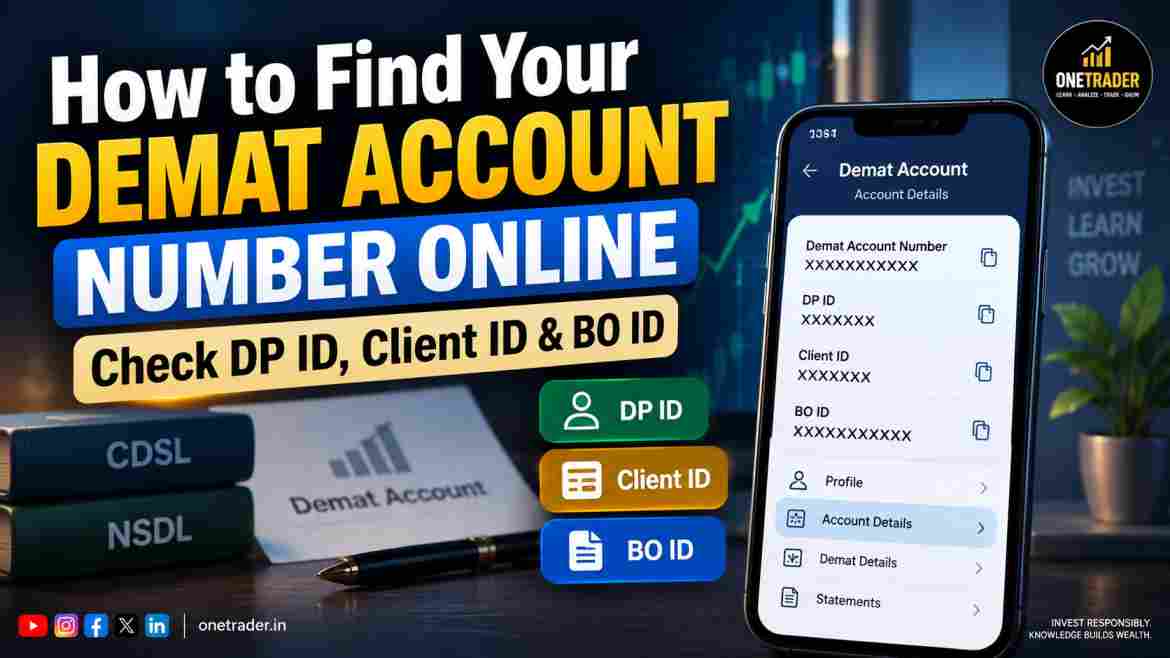
A Demat account number is one of the most important details associated with your investment account. Investors may need it while applying for an IPO, transferring shares, completing account-related requests or filling out financial forms. However, many beginners are confused about where to find their Demat account number and whether it is the same as the DP ID, Client ID or BO ID. These terms may sound complicated, but understanding them is relatively simple.
What Is a Demat Account Number?
A Demat account number is a unique identification number associated with your securities account. The format can differ depending on whether your Demat account is maintained through CDSL or NSDL.
For a CDSL account, the Demat account number is generally a 16-digit numeric number and is commonly referred to as the BO ID, or Beneficiary Owner ID. For an NSDL account, the account is generally identified through a combination of the DP ID and Client ID.
It is important to remember that your Demat account number is different from your trading account ID or login ID. Your trading account is primarily used to place buy and sell orders, while your Demat account is used to hold securities electronically.
Also Read: How to Choose a Financial Advisor: 7 Things to Check Before Hiring One
What Is DP ID?
DP ID stands for Depository Participant Identification. A Depository Participant is the intermediary through which investors maintain their Demat accounts with a depository.
The DP ID identifies the particular Depository Participant. In an NSDL account, the DP ID forms one part of the account identification, while the Client ID forms the other part.
For CDSL accounts, the 16-digit Demat account number can generally be divided into two portions. The first eight digits represent the DP ID, while the remaining eight digits represent the Client ID.
What Is Client ID?
Client ID is the identification number associated with an investor’s individual Demat account within the Depository Participant’s system.
Also Read: How to Change Bank Account in Demat Account Online: Step-by-Step Guide
For example, if a CDSL Demat account number is shown as 12010000 00000001, the first eight digits represent the DP ID and the remaining eight digits represent the Client ID. Together, these numbers form the complete 16-digit Demat account number.
This distinction becomes important when a form specifically asks for the DP ID or Client ID rather than the complete Demat account number.

What Is BO ID?
BO ID means Beneficiary Owner Identification Number. For CDSL accounts, the BO ID generally refers to the complete 16-digit Demat account number.
This is why investors may see different terms such as BO ID, Demat ID or CDSL Demat account number while completing different investment-related forms. Before entering any number, investors should carefully check what the particular form is asking for.
Also Read: Can You Have Multiple Demat Accounts in India? Rules, Benefits & Charges
How to Find Your Demat Account Number Online
The easiest way to find your Demat account number is usually through your broker’s mobile application or website. After logging in, look for sections such as Profile, Account Details, Demat Details, My Account or Personal Details. The exact location can differ between brokers.
Your Demat account details may also be available in the account-opening documents you received when you opened the account. Investors can check their welcome email, account statements or other official account documents for the relevant details.
Another useful place to check is your Consolidated Account Statement (CAS). Depending on the account and statement format, Demat-related identification details may be displayed there.
If you still cannot find your Demat account number, you can contact your broker or Depository Participant through its official customer-support channel and request assistance.
Also Read: How to Calculate Your Stock Market Returns: Absolute Return vs CAGR vs XIRR
CDSL vs NSDL: How to Identify Your Account
The format of the Demat account number can help you understand whether your account is associated with CDSL or NSDL.
A CDSL Demat account generally uses a 16-digit numeric account number. An NSDL account generally uses an alphanumeric identification format beginning with IN, followed by numbers.
However, brokers can display account information differently inside their applications. Therefore, investors should rely on the official Demat details provided within their account rather than assuming the format based only on appearance.
Why Do You Need Your Demat Account Number?
Your Demat account details can be required for several investment-related activities. Investors may need them while applying for IPOs, transferring securities, completing certain account-related forms or using specific depository services.
Also Read: Why Do Stock Markets Crash? The Real Reasons Behind Market Crashes
The information can also become useful when moving investments between Demat accounts or providing account details for certain financial processes.
However, investors should distinguish between account identification details and security credentials. Never share your OTP, password, trading PIN, TPIN or other authentication credentials with unknown individuals, even if they claim to represent a broker or financial service.
Demat Account Number vs Trading Account ID
One of the most common mistakes beginners make is confusing their Demat account number with their trading account ID.
The trading account is primarily connected with buying and selling securities through a broker’s trading platform. The Demat account is where eligible securities are held electronically after purchase.
Also Read: How to Build a Diversified Investment Portfolio in India
Therefore, if an IPO application or another financial form specifically asks for your Demat account number, do not automatically enter your trading account ID. Check the account details provided by your broker and enter the information requested by the form.
Final Thoughts
Finding your Demat account number online is usually straightforward once you understand the difference between the DP ID, Client ID and BO ID. For CDSL accounts, the 16-digit number generally represents the BO ID and Demat account number, while an NSDL account generally uses the DP ID and Client ID together to identify the account.
Investors can usually find these details through their broker’s app or website, account-opening documents, statements or CAS. Keeping your Demat account information safely accessible can make IPO applications, securities transfers and other investment-related activities easier.
Disclaimer: This article is for educational and informational purposes only. Demat account formats and the location of account details may vary between brokers and Depository Participants. Investors should verify their account information through their official broker or DP before using it for any transaction.
Also Read: Market Order vs Limit Order: Key Differences Explained






Keep learning with OneTrader
Explore structured lessons and practical guides to build your market knowledge.