📚 Price Action Series – Part 5
Order Blocks & Institutional Zones (The Footprints of Smart Money)
Learn how institutions enter, where reversals form, and how to trade with Smart Money precision.
Introduction
Every major move in the market — every big rally or sharp crash — starts from one thing:
👉 Institutional Orders.
These are zones where big players (banks, hedge funds, FIIs) place large buy/sell positions.
Retail traders see them after the move, but smart traders know how to identify them in advance — using Order Blocks and Institutional Zones.
Understanding these concepts helps you follow Smart Money instead of being trapped by it.
This is how you turn confusion into confidence — and guesswork into strategy.
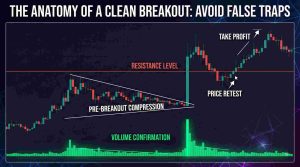
Also Read: The Anatomy of a Clean Breakout: How to Avoid Fakeouts
1. What is an Order Block?
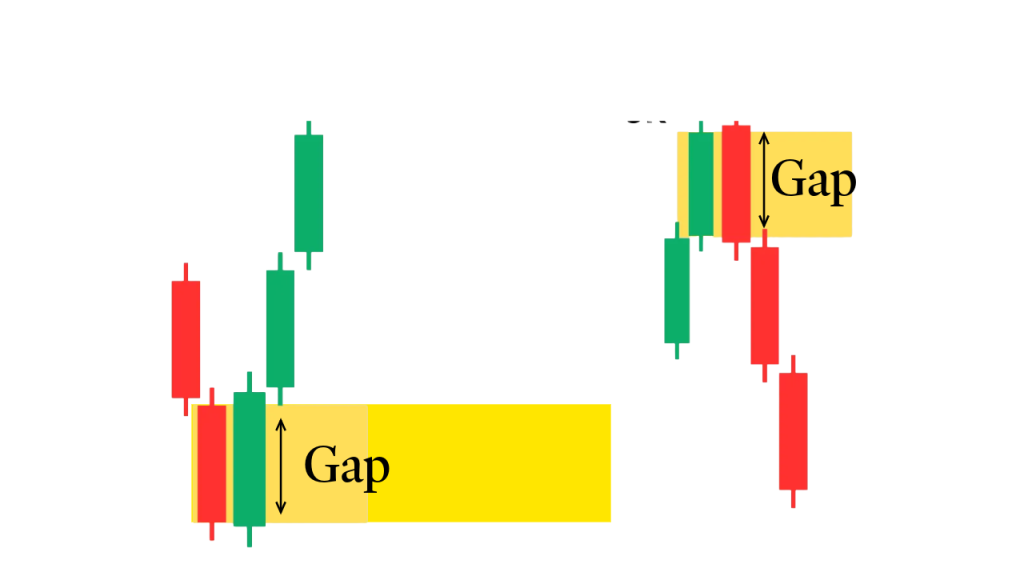
An Order Block is the last bullish or bearish candle before a strong impulsive move.
That candle shows where institutional orders were placed.
- Bullish Order Block (OB):
The last down candle before a strong upward move. - Bearish Order Block (OB):
The last up candle before a strong downward move.
📊 Why it matters:
When price returns to that zone later, it often reacts — because unfilled institutional orders remain there.
2. How Smart Money Uses Order Blocks
Institutions can’t enter all at once — they accumulate (or distribute) positions over a range.
These “footprints” appear as Order Blocks on charts.
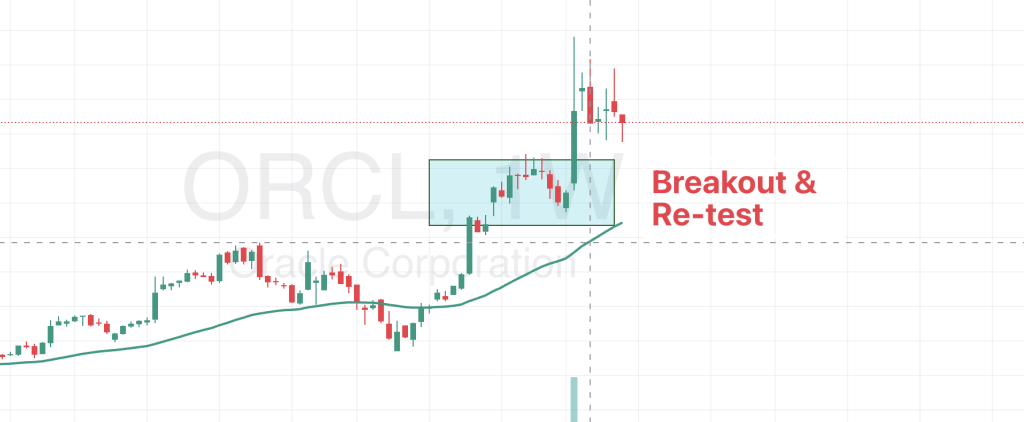
Price moves away aggressively → comes back → retests → then continues in the same direction.
That retest = your best entry opportunity.
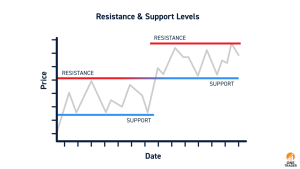
Also Read: Support & Resistance Trading Strategy – Complete Beginner Guide | Onetrader
3. Types of Order Blocks
🔹 Bullish Order Block
- Found at the end of a down move before a rally.
- Represents institutional buying.
- Price usually returns → retests → then continues up.
🔹 Bearish Order Block
- Found at the end of an up move before a drop.
- Represents institutional selling.
- Price usually returns → retests → then continues down.
📈 Example:
Reliance shows a long red candle before a 5% rally — that candle zone becomes a bullish OB.
Later, when price retraces, it bounces right from that zone again.
4. How to Identify Valid Order Blocks
✅ Strong impulsive move follows immediately (break of structure).
✅ Candle shows strong volume.
✅ Price moves away fast (no long consolidation).
✅ OB aligns with market structure direction (HH-HL or LH-LL).
✅ Price respects zone on retest with clear rejection.
📌 Invalid OBs are those where price doesn’t move far or fails to break structure.
5. Institutional Zones Explained
Institutional Zones are areas of high confluence — where order blocks, liquidity, and structure align.
They represent institutional footprints — where Smart Money entered or exited.
Also Read: Price Action Entry Models Explained – How Professionals Enter Trades (Part 9)
A high-quality institutional zone includes:
- An Order Block
- Liquidity sweep
- Break of Structure (BOS)
- Retest
When all these align → high probability trade setup.
6. The Smart Money Cycle
Smart Money always follows a cycle:
1️⃣ Accumulation: Institutions build positions (range-bound phase).
2️⃣ Manipulation: Price sweeps liquidity to trap retail traders.
3️⃣ Distribution / Expansion: Real move begins — breakout with momentum.
4️⃣ Reaccumulation or Reversal: Cycle repeats.
Also Read: Premium & Discount Zones Explained – Smart Money Price Action (Part 8)
📊 Pro traders track this entire flow through Order Blocks and Liquidity Zones.
7. Order Block + BOS Trading Strategy
Setup Example (Bullish Scenario):
1️⃣ Identify a down candle before a sharp rally → mark as Bullish OB.
2️⃣ Ensure BOS (Break of Structure) confirms uptrend start.
3️⃣ Wait for price to return to OB zone.
4️⃣ Enter long near 50% of OB candle.
5️⃣ Stoploss below OB.
6️⃣ Target next structural high or liquidity pool.
Setup Example (Bearish Scenario):
Reverse the steps for Bearish OB (up candle → strong drop → retest → short).
📈 Example (Bank Nifty):
Strong drop from ₹46,000 after small bullish candle → retest to same candle next week → fresh down leg to ₹44,000.
Also Read: Mitigation Blocks & Rebalancing Explained – Price Action Series Part 7
8. Timeframes to Use
- 🔹 4H / Daily → Institutional-level Order Blocks
- 🔹 1H → Swing Trading setups
- 🔹 15M → Intraday precision entries
Higher timeframe OBs are more reliable because institutional orders sit longer there.
9. Combining OB with Liquidity & BOS
👉 Smart Setup Example:
- Price sweeps liquidity (stop hunt).
- Creates OB in opposite direction.
- Breaks structure (BOS).
- Retests OB zone.
- Continue move — perfect Smart Money sequence.
This combo filters 90% of fake OBs.
10. Common Mistakes
❌ Marking every candle as an Order Block.
❌ Ignoring structure — OB must align with trend direction.
❌ Entering too early without BOS confirmation.
❌ Trading against higher timeframe OBs.
Also Read: Fair Value Gaps (FVG) & Imbalance Explained – Sniper Entries with Price Action (Part 6)
📌 Always wait for reaction and confirmation, not prediction.
11. Pro Tips
💡 Strong OBs leave clear “rejections” — look for long wicks + volume confirmation.
💡 Use Fibonacci 50% of OB candle as optimal entry level.
💡 Always mark two zones — fresh OB and mitigation OB (retested one).
💡 If multiple OBs form, focus on the one linked with BOS or CHoCH.
12. Real Chart Example – Titan
- Bullish OB formed near ₹2800 before breakout to ₹3100.
- Price later pulled back to ₹2830 → rejection candle → continued rally.
- Liquidity swept previous lows before OB retest — perfect institutional setup.
13. Order Block Trading Checklist
✅ Identify clear impulsive move + last opposite candle.
✅ Confirm BOS or CHoCH after OB.
✅ Mark OB zone precisely (open-close + wicks).
✅ Wait for price to revisit.
✅ Watch rejection candles (e.g., hammer, engulfing).
✅ Enter with stop beyond OB zone.
✅ Target next structural high/low or liquidity zone.
14. Psychology Corner
Order Block trading teaches patience and precision.
Most traders enter emotionally — Smart Money enters once, at the best price.
Also Read: Liquidity Concepts & Stop Hunt Zones – The Smart Money Trap – Part 4
⚡ “If you learn to wait for your order block, you’re trading like an institution, not a retail trader.”
Conclusion
Order Blocks and Institutional Zones are the footprints of Smart Money.
They tell you where big players placed their trades and why price reacts to those zones again and again.
Combine OBs with Liquidity Concepts (Part 4) and Market Structure (Part 3) — and you’ll trade with unmatched clarity.
👉 Smart Money doesn’t predict — it reacts. You should too.
Also Read: Understanding Market Structure – Trends & Ranges-Onetrader
✅ FAQ Section
1️⃣ What is an Order Block?
It’s the last bullish or bearish candle before a strong move, showing where institutional orders entered.
2️⃣ What’s the difference between a Bullish and Bearish Order Block?
Bullish OB = last down candle before rally; Bearish OB = last up candle before drop.
3️⃣ How do you trade Order Blocks?
Wait for BOS/CHoCH confirmation, enter on retest of OB, stoploss beyond the zone, and target next structure.
4️⃣ Which timeframes are best for OB trading?
4H and Daily for swing/investment, 15M–1H for intraday precision entries.
Also Read: Why Choose Price Action Over Indicators?
5️⃣ Are Order Blocks visible to everyone?
Yes, but few understand their logic — most mistake them for random candles.