🟡 Why Gold Rallied, Correction View, and Future Scope (2025 Full Analysis)
By Onetrader — Smart Investing Insights
Introduction
Gold has once again captured global attention in 2025, reaching new record highs and outperforming most traditional assets. But this surge wasn’t random — it was fueled by deep structural shifts in global finance.
From central bank accumulation to ETF inflows and interest-rate dynamics, multiple factors aligned to create one of gold’s most powerful rallies in recent history.
In this detailed Onetrader analysis, we decode the real reasons behind gold’s rally, the possible correction scenarios, and the future scope for investors who want to understand what comes next.
Also Read: Gold ETF: How It Works, Benefits, Risks and How to Invest
1️⃣ Why Gold Rallied in 2025 — The Real Drivers
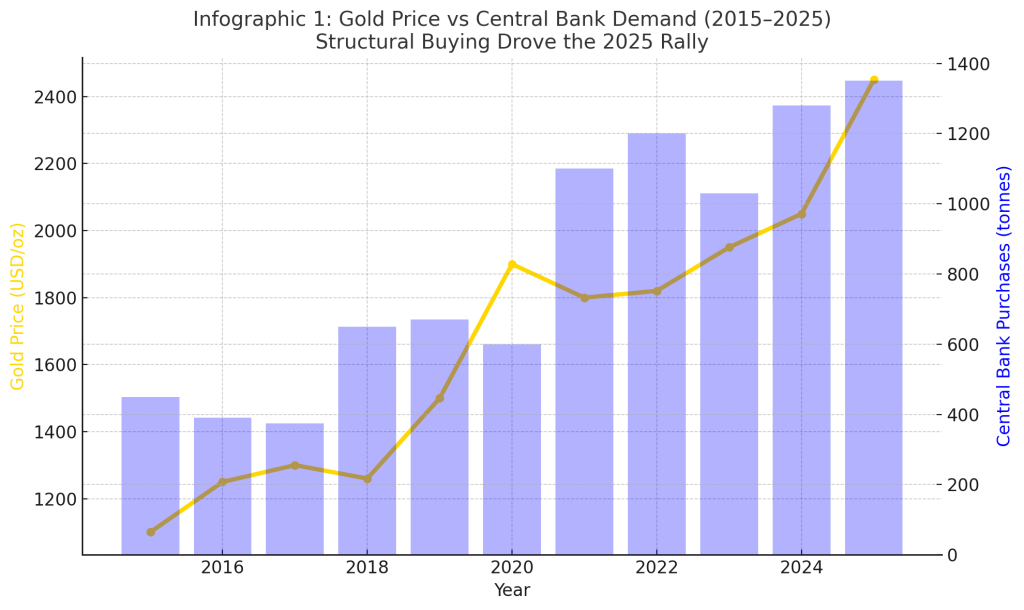
1. Central Banks Turned into Structural Buyers
The foundation of the gold rally began with central banks quietly but consistently increasing their gold reserves.
According to the World Gold Council, global central banks purchased around 244 tonnes of gold in just the first quarter of 2025, continuing their record-breaking trend from previous years.
This consistent accumulation is a long-term, non-speculative demand — the kind of buying that establishes a price floor and tightens physical supply.
Countries like China, India, Turkey, and Poland have been major contributors to this ongoing accumulation.
2. Massive Inflows into Gold ETFs and Funds
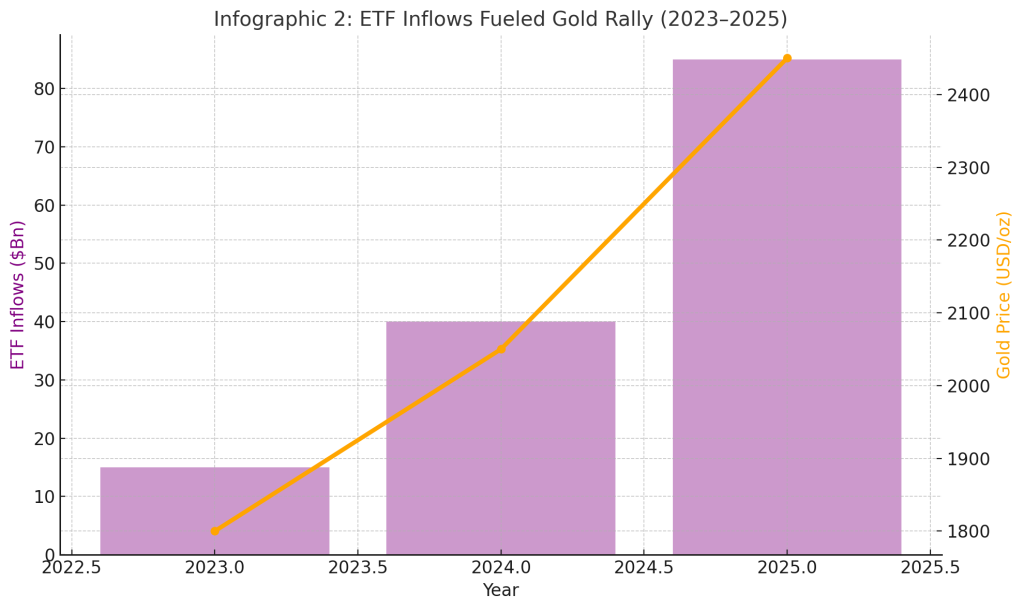
The year 2025 also witnessed record-breaking ETF inflows, as global investors sought refuge amid uncertainty.
Gold-backed ETFs and funds collectively attracted tens of billions of dollars, with ETF assets under management climbing to new highs.
These ETF flows are significant because every new unit created is backed by physical gold holdings — turning financial inflows into actual metal demand.
Also Read: Gold Investment: A Complete Guide to Investing in Gold
This institutional shift in sentiment helped gold rally over 50–60% year-to-date (YTD) by October 2025, as reported by multiple financial data trackers and Reuters market coverage.
3. Rate-Cut Expectations and Falling Real Yields
Gold’s inverse relationship with real yields is well-known.
When real yields (interest rates adjusted for inflation) fall, gold becomes more attractive because its opportunity cost decreases.
In 2025, expectations of Federal Reserve rate cuts triggered a drop in real yields, directly pushing investors toward non-yielding safe-haven assets like gold.
This macro setup — falling real yields, weak dollar, and rate-cut bets — has been one of the strongest tailwinds for bullion.
Also Read: 🟡 When to Buy Gold? A Complete Timing Strategy Using Market Cycles (2026 Guide)
4. Geopolitical and De-Dollarization Factors
The world in 2025 continues to face heightened geopolitical uncertainty — from conflicts and trade wars to currency realignments.
This has driven many countries to diversify their reserves away from the U.S. dollar and into gold, which is seen as neutral and universally trusted.
This de-dollarization trend has been slow but steady — and it has added a consistent layer of support beneath gold’s long-term demand.
5. Robust Retail and Festival Demand in Asia
In India and across Asia, physical demand remains strong, particularly during festive seasons.
Domestic gold prices in India crossed ₹1.27 lakh per 10g in October 2025, reflecting both global prices and currency effects.
Even at high prices, cultural and emotional attachment to gold keeps local demand steady — making it a dependable support pillar for global prices.
Also Read: Silver vs Gold: Which Is Better Now After the Rally and Crash? | Onetrader
2️⃣ Correction View — What Could Trigger a Pullback
While the long-term structure remains positive, short-term corrections are natural and healthy after such a powerful rally.
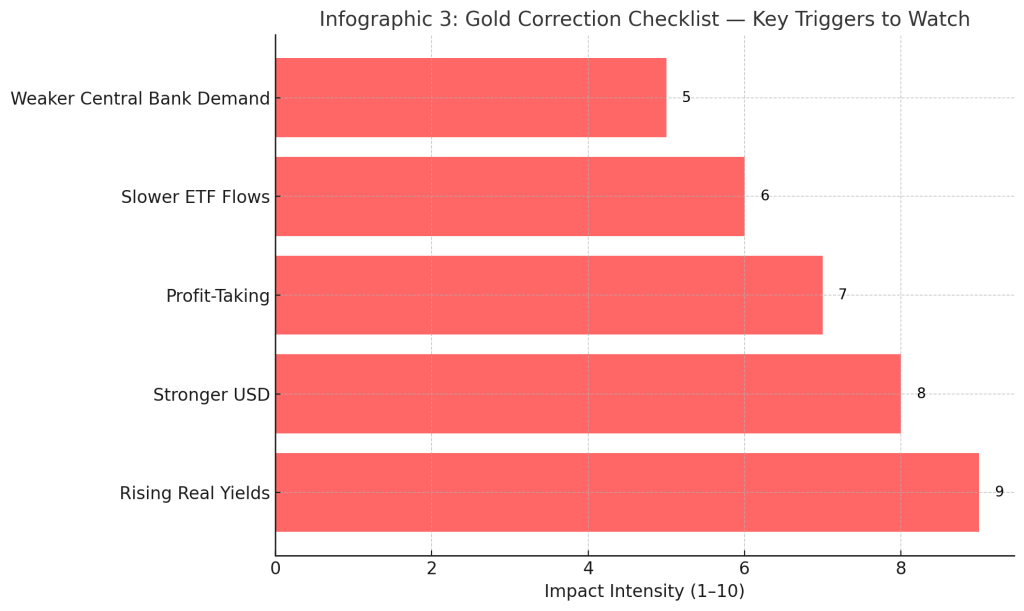
Here are the major factors that could lead to a gold correction:
A. Rising Real Yields and a Stronger U.S. Dollar
If U.S. inflation cools faster than expected or economic growth surprises on the upside, real yields may rise again.
This could lead to temporary dollar strength — historically the most reliable short-term trigger for gold corrections.
Impact: Potential 5–15% pullback over a few weeks or months.
Also Read: Silver vs Gold: Which Is the Better Investment in 2025 and Beyond?
B. Profit-Taking After a Steep Run
After a parabolic rise, traders and institutions often book profits.
In October 2025, gold already saw a 4% intraday drop after hitting all-time highs, purely due to profit-booking pressure.
This does not change the long-term uptrend but adds short-term volatility.
C. Slowdown in ETF Inflows or Central Bank Buying
Gold’s recent momentum heavily depends on continued demand from ETFs and central banks.
If either slows down, prices could see deeper corrections of up to 20%, before finding new support levels.
D. Shift Toward Risk-On Assets
If global markets regain confidence and equities start outperforming again, some capital could rotate out of gold.
This factor is cyclical and short-lived but can create short-term pressure.
Also Read: Gold vs Equity: The Real Relationship Every Investor Must Understand (2025 Guide)
3️⃣ Future Scope — Scenario-Based Outlook
Gold’s outlook beyond 2025 depends on how these global forces evolve.
Below are three practical scenarios investors can keep in mind:
| Scenario | Key Drivers | Outlook |
|---|---|---|
| Bull Case | Continued central-bank buying, persistent ETF inflows, rate cuts | Prices may rise another 30–60% over the next 2 years |
| Base Case | Moderate ETF demand, steady central-bank accumulation | Gold stays elevated with 5–15% volatility range |
| Bear Case | Higher real yields, stronger dollar, reduced institutional demand | Short-term correction up to 20% possible |
4️⃣ Practical Investment Strategy
| Investor Type | Gold Allocation | Ideal Instruments |
|---|---|---|
| Conservative | 30–40% | Sovereign Gold Bonds (SGBs), Gold ETFs |
| Balanced | 20–30% | Gold ETFs + SIP mode |
| Aggressive | 5–15% | ETF exposure only (for diversification) |
Onetrader Tip: Always use staggered buying — never go all-in during a rally. Add gradually during corrections and rebalance your portfolio once a year.
5️⃣ Key Takeaways
✅ The 2025 gold rally is structural, driven by central banks and ETFs, not speculation.
✅ Short-term corrections are healthy and expected after sharp moves.
✅ The long-term trend remains positive as real yields stay low and geopolitical risk persists.
✅ Investors should combine patience and discipline — not emotion — to benefit from gold’s cycle.
6️⃣ Conclusion
Gold’s performance in 2025 reaffirms its timeless role as both a wealth protector and a crisis hedge.
While markets fluctuate, the underlying reasons for holding gold remain as relevant as ever: stability, trust, and independence from fiat volatility.
Also Read: Where is Indian Investors’ Wealth? Gold, Real Estate, or Markets?
From the data, the takeaway is clear —
“Equity builds wealth. Gold preserves it.”
With careful asset allocation, rebalancing, and awareness of macro signals, investors can make gold a reliable ally in the journey toward financial freedom.
💬 Frequently Asked Questions (FAQ)
1. What caused the gold rally in 2025?
The 2025 gold rally was driven by strong central bank purchases, record ETF inflows, expectations of rate cuts, and rising geopolitical tension. These factors combined with low real yields created sustained demand from both institutional and retail investors.
Also Read: Gold Investment: History, Importance, Trends, and Future Analysis (2025)
2. Will there be a correction in gold prices?
Yes. After a massive rally, short-term corrections are healthy and expected. Rising real yields, a stronger dollar, or profit-taking by investors can lead to 5–15% pullbacks. A deeper correction of 20% or more may occur if central bank buying or ETF inflows slow down significantly.
3. What is the future outlook for gold after 2025?
Gold’s long-term outlook remains structurally positive. Central banks continue to diversify reserves, and investors still view gold as a safe-haven asset. Prices are expected to remain elevated, with periods of consolidation and moderate corrections along the way.
4. How much should I invest in gold?
The ideal gold allocation depends on your risk appetite:
- Conservative: 30–40%
- Balanced: 20–30%
- Aggressive: 5–15%
Prefer Sovereign Gold Bonds (SGBs) or Gold ETFs for efficient and tax-friendly exposure.
5. Is it the right time to buy gold now?
Rather than timing the market, the smarter approach is gradual accumulation. Use SIPs in Gold ETFs or staggered purchases in SGBs. This strategy helps average out volatility and ensures exposure to the long-term uptrend in gold prices.